AI-first
AI works with me from the first day of a project
I use AI tools every day: for analysis, content, code and running online shops. On this page I show how that works in projects, where I draw the line and what your business gets out of it.
What AI helps me with day to day
This is not an add-on to my services. It is simply how I work.
Analysis
I use AI to organise notes from meetings, requirements and documentation. This helps me see sooner what is missing and what else I need to ask you.
Content and translations
I write product and service descriptions and blog posts with the help of AI. That is how the OC1 catalogue was created in five languages.
Code
In my projects, AI writes the code, using a tool called Claude Code. I decide what should be built, answer its questions, test and check the result. That is how I built online shops, plugins, integrations and my own apps.
Day-to-day support
AI helps me with ongoing work on online shops: fixes, content updates and checking that everything works.
Reviews and audits
I hand finished code and texts to several independent AI sessions for review at the same time. Each one checks a different area, and I decide what to fix.
What I have built this way
I carried out each of these projects on my own, and AI was part of it from the start.
OC1 shops
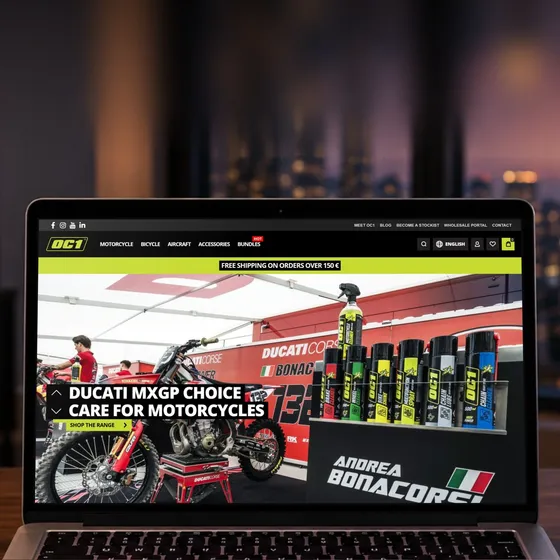
Online shops and B2B portals in five languages, around 30 custom plugins and more than 20 integrations. They launched after four months, and I am still developing them today.
Astroteka
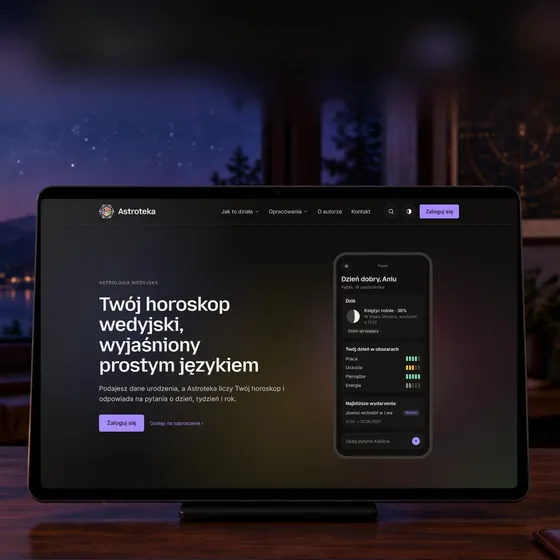
My own app in which AI answers questions about your horoscope. A program does the calculations, and AI writes from those results and from the knowledge in nearly 100 books.
Hintext
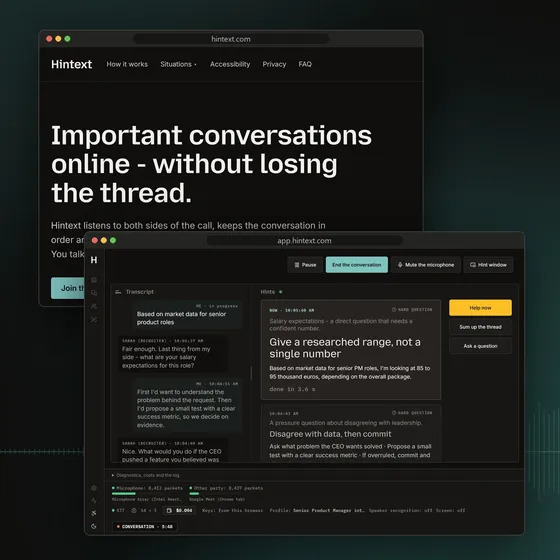
My own app that helps during online conversations. It transcribes both sides of the conversation live and suggests short hints, and after the call it writes up notes.
The website you are reading
It was built the same way, together with its content management panel and graphics.
I can also build AI into your solution
I have built two apps of my own in which AI works for users. The first is Astroteka. Its AI assistant answers written and spoken questions, and I built it so that it cannot make things up.
Its own knowledge base
I turned nearly 100 books into about 24,800 rule cards. A program picks the cards that match the question, and AI writes the answer from them.
Several models, each for a different job
One Claude model handles the conversation, a more powerful one writes longer reports, and the cheaper Gemini serves test accounts.
Measurement, not impressions
Better structured prompts cut the AI cost by 55%. I reduced the time to the first word of an answer from 64 to 23 seconds.
Hintext: AI that helps live
The second app listens to an online conversation and suggests a short hint within a few seconds. Here every second and every penny counts.
A cheap model decides, a stronger one writes
A small model judges whether a hint is needed at all. Only then does a larger one write it. Most of what is said never reaches any model, because a simple rule filters it out.
Data that does not exist cannot leak
The audio of the conversation does not pass through my server and is not recorded. The server and database are in France.
Not tied to one provider
Users can choose a Claude model or the European Mistral in their account settings. I know from measurements that switching providers takes a few days of tuning, not a flick of a switch.
Legal rules built into the product
Hintext does not recognise emotions or assess people. I built these limits, in line with the EU AI Act, into the product and its terms of service from the start.
How I work with AI on your project
I describe the project stages on the How I work page. Here I show what AI does in them and what I do.
- 1
I agree the goal and scope with you
What we build and why is something the two of us discuss. I do not hand this part over to AI.
- 2
The project has its own memory
I record decisions, the reasons behind them and the working rules in one file. AI reads it at the start of every session, so it does not start from scratch or go back to ideas we have already rejected.
- 3
Mock-up first, then code
I start any larger change with a clickable mock-up. Only when it is right does the code get written.
- 4
AI writes, I test
AI writes the code, and I answer its questions. We work in small steps. Each one ends with a list: what to click and what should appear. I check the look and behaviour myself, because AI cannot judge that.
- 5
I turn a mistake into an automatic check
A rule written in words only works as long as someone remembers it. So a mistake that happens twice gets an automatic check. From then on, a program watches for it.
- 6
A person approves the release
A change reaches the live shop only after a preview and a backup. I click the final button myself, and after the release I check that everything works.
What AI does not do in my work
It does not see passwords, customer data or sensitive data
AI has no access to passwords or to your customers' personal data. It does not get the company's sensitive data either. This is the first rule I set in a project.
It does not decide
AI suggests, a person decides. The choice and the responsibility for the result are mine.
It does not calculate or guess
AI can make things up convincingly. That is why anything that can be calculated or checked is done by an ordinary program. AI gets the finished data and writes text from it.
It does not change anything unchecked
There are no “quick” changes on a live shop. Each one goes through a preview, a backup and a check after release.
It does not answer everything
When AI talks to people, I set topics it does not touch. Astroteka does not answer questions about illness, and Hintext does not assess people or their emotions.
It does not get more data than it needs
The best-protected data is data that does not exist. I design solutions so that the model receives only what the task requires.
What you get out of it
Shorter timelines
One person with AI gets much more done and checked than without it. The OC1 shops launched after four months, before the season.
One person instead of several
Analysis, code, content and translations are in one pair of hands. Nothing gets lost between contractors.
AI costs under control
If AI is to run in your solution, I track its cost from day one. Simple tasks go to a cheaper model or an ordinary program, because the cheapest request is the one you do not have to send.
The choice stays with you
I do not tie your solution to one AI provider. When prices or regulations change, or a better model comes along, it can be swapped.
Want to see how this could work for you?
Tell me what you want to build or sort out. I will tell you what I will do myself and where AI will help.