From a shop plan to three brand websites and a decision not to build the shop
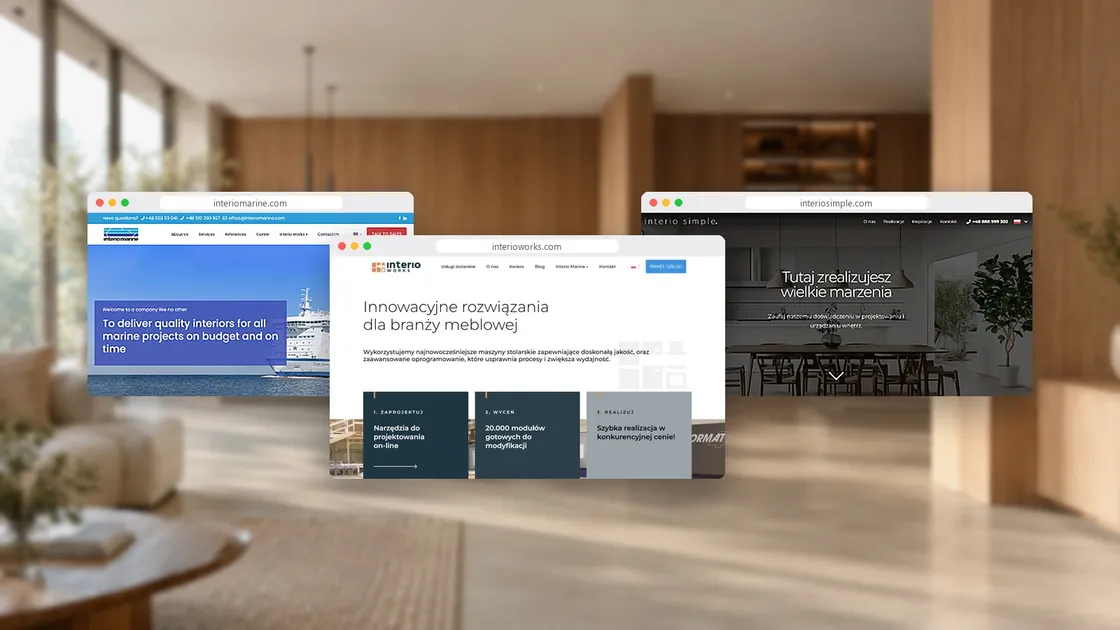
Interio Group is a furniture company that operates under three brands. I was brought in to build a shop connected to a furniture cutting system. The analysis showed that sales could not be built on that system. Instead of a shop, I built three brand websites, which the company now develops itself.
- Client
- Interio Group
- Industry
- Furniture and interiors
- Platform
- WordPress
- Scope
- Implementation, Development
- Role
- Business analyst, implementation specialist
- Duration
- January 2024 – August 2025
- Way of working
- Contract, working directly with the management board
- Website
- interiomarine.com
Starting point
Interio Group operates under three brands. Interio Marine fits out the interiors of ferries and ships. Interio Works makes furniture components for joiners and architects. Interio Simple makes kitchens and wardrobes for private and business clients.
I joined the company to build an online shop connected to a furniture design and cutting system. The company was already using that system.
The brand websites were in different states. Interio Marine had only a one-page website that could not be edited. Interio Works and Interio Simple had no websites at all.
Goals
- Check whether a lasting online shop could be built on the cutting system.
- Give each brand a website designed for its audience.
- Build websites that staff can update themselves.
- Hand the websites over so that the company could keep developing them on its own.
My role
I worked for Interio Group on a contract, directly with the management board. I was responsible for:
- analysis: assessing the cutting system and making a recommendation to the board;
- build: three WordPress websites, from content structure to launch;
- content: materials gathered from departments and staff, agreeing the content, interior inspiration images generated with the help of AI;
- development: new content and features after the websites went live;
- handover: training staff to use WordPress and handing over access.
What I did
- Analysis of the cutting system. Research with the vendor and a recommendation to the board not to build the shop on it.
- Interio Marine. A new website with a content management system to replace the one-page site. A portfolio of projects on ferries and ships. Polish, English and German versions.
- Interio Works. A website for a new brand aimed at joiners and architects. Sign-up for new business clients and a link through to the cutting system's panel. Polish and German versions.
- Interio Simple. A website for a new brand of kitchens and wardrobes. An “Inspiration” section with articles on interior styles and images generated with the help of AI. Polish and German versions.
- Content and development. Materials gathered from departments and staff, agreeing the content and expanding the websites after launch.
- Handover. WordPress training for staff and handing over access.
Sometimes the best recommendation is: let's not build it
The shop was meant to use the furniture design and cutting system the company was already using. In the first 2–3 months I analysed the system and did some research with its vendor. The system had no ready way to connect to a shop, and some features did not work yet. The vendor also had no ready technical solutions that sales could be built on. I recommended not building the shop on it. The board accepted the recommendation before the company incurred any implementation costs.
One company, three brands, three audiences
Each brand speaks to someone different, so each got its own website. Interio Marine shows its work on ferries and ships to maritime companies, in three languages. Interio Works invites joiners and architects to work with it on production. They can sign up and go to the panel where they design and order components. Interio Simple speaks to people fitting out a kitchen or a wardrobe. Its “Inspiration” section shows them different interior styles.
Websites the company runs itself
All three websites were built on WordPress. I chose it because someone at the company already knew the system, and it is easier for staff to take over something familiar. After launch I trained staff to use the websites and handed over access. Today the company develops these websites itself.
Result
- The board made its decision before the company incurred costs. No shop was built on an unfinished system.
- Each brand has its own website, designed for its audience.
- The websites can be updated without a developer. Staff are trained in WordPress.
- The company took over the websites and continues to develop them itself.
Takeaways
- Before you build a shop on someone else's system, check its vendor. No way to connect and features that do not work are a sign that it is not worth building sales on it.
- Choose a tool your people know. Staff will take over a website faster if they already know the system.
- Each brand needs a website for its own audience. You write differently to a shipowner, to a joiner and to someone fitting out a kitchen.
Key skills
- Business analysis
- Pre-implementation analysis
- WordPress
- Content editing
- Working with AI
Got a project to discuss?
Tell me what you want to achieve. I will tell you what I can do myself and where it is worth bringing in specialists.